The Psychology Behind the Heated Rivalry Obsession: A Therapist’s Take
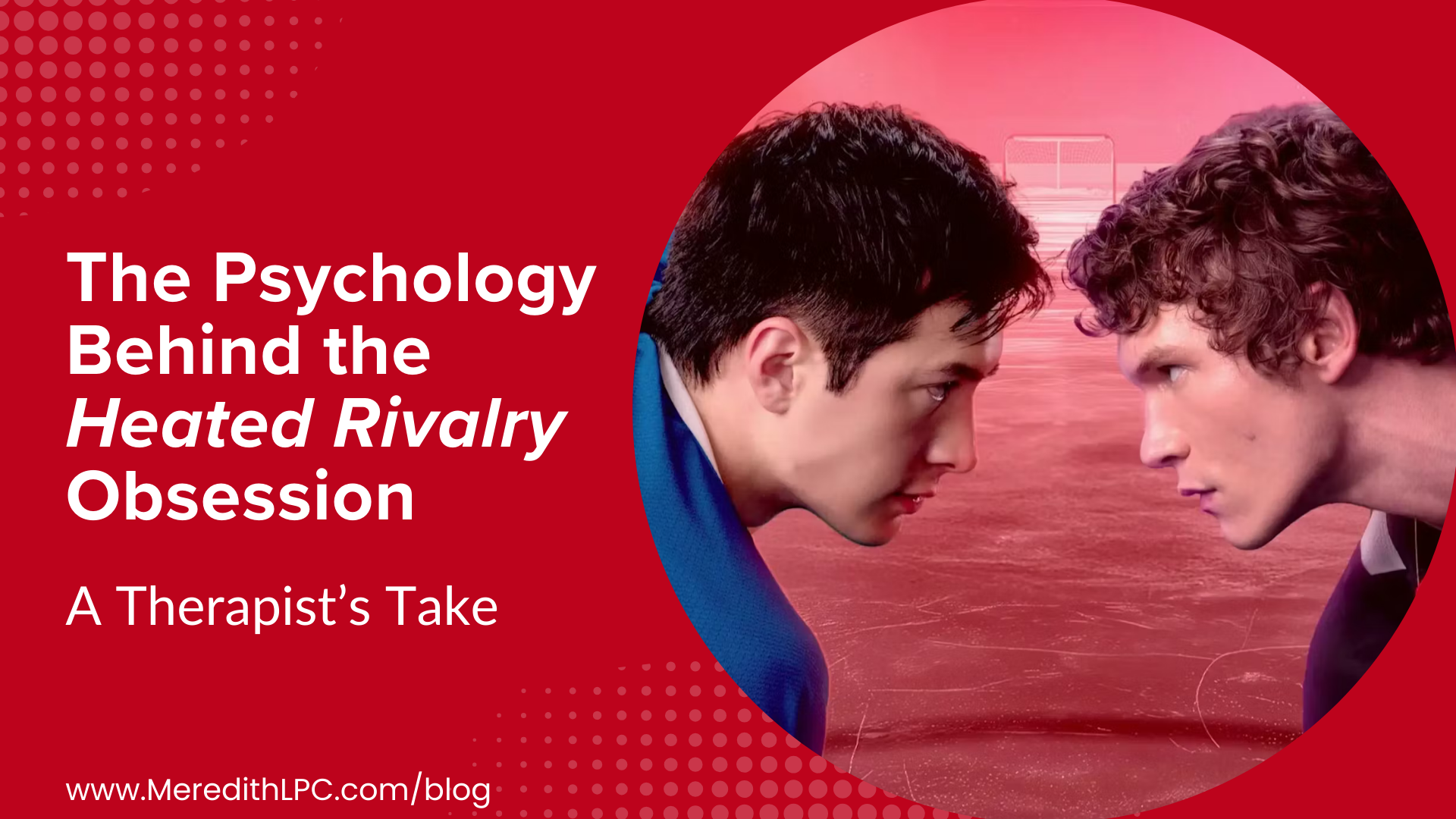
If you’ve found yourself thinking about Heated Rivalry more than you expected, you’re not alone. A lot of people who don’t usually reread books, rewatch shows, engage deeply in fandom, or even follow hockey are suddenly very invested in Shane Hollander and Ilya Rozanov. And while it might feel like “it’s just a romance,” there are actually several psychological reasons this story is hitting so hard right now.
From enemies-to-lovers tension to meaningful queer representation to the very human desire for escape during stressful times, Heated Rivalry taps into emotional needs many of us are carrying, whether we realize it or not.
Let’s break down why this story has such a grip on people and why that makes a lot of sense.
The Power of Enemies to Lovers and Emotional Tension
Enemies to lovers is one of the most psychologically compelling relationship tropes out there. It activates emotional intensity, anticipation, and payoff all at once.
From a mental health perspective, this trope works because:
Conflict creates emotional arousal, which increases engagement
Forced proximity keeps characters emotionally invested
Gradual vulnerability feels earned rather than instant
In Heated Rivalry, the rivalry is not just about hockey. It’s about pride, identity, fear of vulnerability, and the need to feel seen. Watching two people slowly dismantle their emotional armor is deeply satisfying, especially for fans who know what it feels like to keep parts of themselves guarded.
Attachment Styles on Ice
A big part of the appeal lies in attachment dynamics. Many fans intuitively recognize familiar patterns even if they don’t have the language for them.
Emotional avoidance
Difficulty expressing needs
Fear of dependence
Strong reactions masked as competitiveness
These patterns are common in real life relationships too, especially among high-achieving adults. Seeing characters struggle, mess up, and still grow provides both validation and hope. It reassures fans that emotional growth does not require perfection, just willingness.
And yes, sometimes that willingness looks like chirping your rival instead of saying how you feel. Growth is not linear.
Queer Representation That Feels Grounded and Affirming
Another major reason Heated Rivalry resonates so strongly is its queer representation. This is not a side plot or a token identity. Sexuality is integrated into the characters’ lives, fears, careers, and relationships in a way that feels real.
For many fans, especially LGBTQ+ fans, this kind of representation provides:
Validation
A sense of belonging
Relief from constantly seeing oneself erased or stereotyped
For others, it offers exposure and empathy without feeling heavy-handed. Stories like this normalize queer relationships simply by allowing them to be complex, funny, messy, and deeply human.
As a therapist, I see how powerful it can be when people finally see parts of themselves reflected back without judgment. That kind of recognition sticks.
Escaping a Very Stressful World
We also cannot ignore the timing.
Many people are overwhelmed by distressing national and international events, political uncertainty, economic stress, and a constant news cycle that rarely offers relief. Fiction becomes more than entertainment in moments like this. It becomes regulation.
Immersing yourself in a familiar story provides:
Predictability
Emotional containment
A break from hypervigilance
Heated Rivalry offers a world where conflict has structure, resolution is possible, and connection eventually wins. That can be incredibly soothing when real life feels chaotic or unsafe.
Plus, it is a lot more comforting to worry about playoff standings than, well, everything else.
Fiction as Safe Emotional Practice
Stories allow us to feel deeply without real-world consequences. This is sometimes called emotional rehearsal.
Through fiction, fans can:
Explore desire without risk
Process longing and rejection safely
Experience intimacy at a controlled distance
This is especially helpful for people who struggle with vulnerability, anxiety, or relationship fears. Engaging with emotionally rich stories can gently stretch our comfort zones without overwhelming us.
And sometimes, it is just nice to care intensely about something that does not involve your email inbox.
Community, Fandom, and Shared Meaning

Another underrated factor is fandom itself. Engaging with others who love the same story creates connection, shared language, and joy.
For adults especially, shared enthusiasm can be rare. Fandom offers:
Community without obligation
Playfulness
Creative expression
In a world that often demands productivity, fandom gives permission to enjoy something purely because it feels good.
That said, it is also important to talk about balance.
When a Fandom Love Might Be Too Much
Loving Heated Rivalry or any fandom is not a problem. However, it can be helpful to check in with yourself if engagement starts to interfere with daily life.
Some signs to be mindful of:
Neglecting responsibilities consistently
Using fandom as the only coping strategy
Feeling distressed when not engaging with it
Avoiding real-life relationships or emotions through constant immersion
Enjoyment becomes less supportive when it shifts from replenishing to avoidant.
A helpful question to ask is: Is this adding to my life or helping me avoid something I need to address?
If the answer feels uncomfortable, that does not mean you need to give up the fandom. It may mean there is something underneath that deserves attention too.
Final Thoughts
Heated Rivalry works because it speaks to real emotional experiences through humor, tension, and connection. It offers representation, escape, emotional depth, and the reminder that growth is possible even when people are stubborn, competitive, and emotionally allergic to honesty.
So if you love it, you are not silly or dramatic. You are human.
Just maybe remember to hydrate, stretch, and occasionally think about something other than hockey rivals making questionable emotional choices.
If parts of this story feel especially familiar or bring up questions about your own relationships or emotional patterns, therapy can be a supportive place to explore that with curiosity and care. Reach out today to schedule to appointment.
Related Articles: When Your Hero Lets You Down: Coping with Celebrity Disappointment
Dating in Stars Hollow: What Gilmore Girls Teaches Us About Healthy (and Unhealthy) Relationships