Parasocial Relationships: When Being a Fan Becomes Personal
At some point, being a fan can start to feel surprisingly personal.
An actor gives an interview and the internet analyzes every word. A celebrity posts something vague and thousands of people begin constructing theories. Two cast members interact at an event and suddenly strangers online are debating what their body language “really means.”
People begin speaking with confidence about what celebrities must be thinking, feeling, or secretly doing behind the scenes.
The conversations get heated. Fans pick sides. Arguments start.
And somewhere along the way, it stops being just about enjoying the show, the music, or the story.
As both a therapist and a lifelong fan, I’ve spent a lot of time observing this dynamic in fandom spaces. I genuinely enjoy fandom culture. I have attended conventions, met actors and creators, and had those fun moments where you briefly interact with someone whose work you admire. Being a fan can be joyful, creative, and deeply meaningful.
At the same time, the psychology of fandom sometimes drifts into something called parasocial relationships. When emotions run high in fandom spaces, those relationships can start to influence how people think, feel, and interact with others.
Let’s talk about what parasocial relationships actually are, why they exist, and how to enjoy fandom while keeping things healthy.
What Is a Parasocial Relationship?
A parasocial relationship is a one-sided emotional connection that a person forms with a public figure.
That public figure might be:
A celebrity
A musician
An actor
A YouTuber or influencer
A podcast host
A fictional character
The key feature is that the audience member feels a sense of familiarity or emotional closeness, while the public figure does not personally know them.
This concept was first described by sociologists in the 1950s when television became widespread. Viewers started to feel like they “knew” news anchors and TV personalities who appeared in their homes every day.
Today, social media intensifies this experience. When celebrities share personal stories, livestream their day, or interact with fans online, it can feel like we are seeing the “real” person. Our brains are wired for relationships, so it makes sense that we respond emotionally.
In many ways, parasocial relationships are a normal byproduct of storytelling, media, and human psychology.
Being a Fan Is Actually a Good Thing
Before we go any further, let me say something clearly.
Being a fan is not unhealthy.
In fact, fandom can bring many positive benefits.
Community
Fandom often creates a sense of belonging. People bond over shared interests, whether that is a TV show, music artist, book series, or film franchise.
Friendships often begin with something as simple as, “Wait, you love that too?”
Joy and Inspiration
Creative work affects us emotionally. A powerful story, song, or performance can help people process their own experiences and feel less alone.
Art has always done that.
Creativity
Fan communities create incredible things:
Fan art
Fan fiction
Podcasts
Video edits
Discussion forums
Fandom is one of the most creative spaces on the internet.
Harmless Escapism
Life can be stressful. When the real world feels particularly intense, something many people are experiencing with the current political and social climate, stepping into a fictional world for a while can give our brains a much needed pause.
That is not avoidance. It is often just healthy recreation.
I say this as a lover of fandom culture myself. I understand the excitement of meeting a celebrity at a convention or getting an autograph from someone whose work meant something to you.
That joy is real and valid.
Parasocial Relationships Exist on a Spectrum
One of the most important things to understand is that parasocial relationships are not automatically unhealthy.
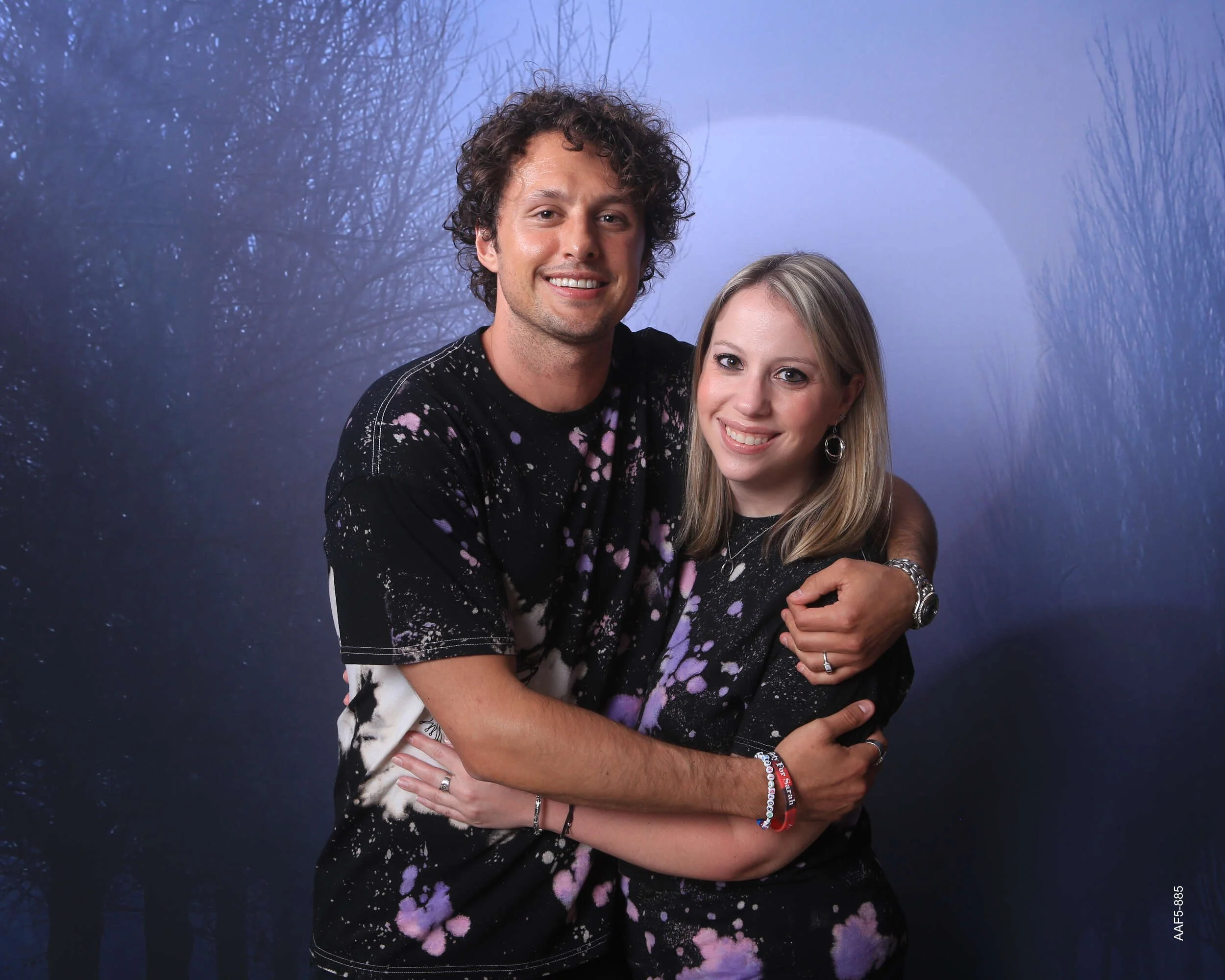
When I met actor Michael Vlamis at a convention, he already knew my name from social media interactions, which made me consider my own parasocial relationships
They exist on a spectrum.
Light Parasocial Engagement
Most fans fall here.
Examples include:
Enjoying interviews with a favorite actor
Feeling happy when a musician releases new music
Following a creator on social media
Talking with friends about celebrity news
This level of engagement is normal and harmless.
Moderate Parasocial Connection
This might include:
Feeling emotionally invested in a celebrity’s career
Being curious about their personal life
Participating in fandom discussions regularly
Still very common. Still generally healthy.
Intense Parasocial Attachment
This is where things can start becoming more complicated.
Examples might include:
Feeling personally betrayed by a celebrity’s decisions
Believing you know their true personality or intentions
Interpreting small details as “proof” of hidden truths
Spending significant emotional energy defending them online
Problematic Parasocial Behavior
At the far end of the spectrum, the relationship begins interfering with reality.
This might involve:
Harassing other fans or critics
Obsessively monitoring a celebrity’s personal life
Feeling entitled to their attention or privacy
Experiencing major emotional distress over their actions
Most people never reach this level. But online environments can sometimes encourage that shift.
When Parasocial Relationships Become a Problem
When parasocial relationships slide into the unhealthy end of the spectrum, the shift often looks the same. The fan begins to feel personally involved in a relationship that is actually one-sided.
A celebrity’s decisions can begin to feel like personal betrayal. Fans may feel responsible for defending them, exposing supposed truths, or controlling the narrative around their lives.
Over the years, there have been numerous unfortunate moments where parasocial dynamics clearly crossed a line.
Real Examples of Parasocial Relationships Going Too Far
Selena Quintanilla (1995)
A fan named Yolanda Saldívar became deeply involved in Selena’s life after running her fan club and later working for her. When Selena attempted to distance herself over financial concerns, Saldívar murdered her. It remains one of the most tragic examples of parasocial attachment becoming dangerous.Björk (1996)
An obsessed fan named Ricardo López developed an intense fixation on the singer. After perceiving her relationship with another musician as a personal betrayal, he attempted to mail a letter bomb to her home, which authorities intercepted.Kit Connor being pressured to come out (2022)
After starring in Heartstopper, Connor faced intense accusations of “queerbaiting” from fans speculating about his sexuality. The pressure became so intense that the young actor publicly came out as bisexual, later writing that fans had forced him to do so.Shipping speculation involving Harry Styles and Louis Tomlinson
A segment of the One Direction fandom became convinced the two musicians were secretly in a romantic relationship despite repeated denials. Years of online theory building and investigation spilled into harassment of partners and family members.The Heated Rivalry fandom controversy
Actors Hudson Williams and François Arnaud released a public statement asking fans to stop spreading racist, homophobic, misogynistic, and parasocial commentary about the cast after harassment and speculation escalated online.Harassment of actors in the Star Wars: The Last Jedi fandom
Actors Kelly Marie Tran and John Boyega experienced severe harassment from parts of the fandom after the film’s release. Tran eventually left social media due to the abuse.Taylor Swift jet tracking controversy
A college student created social media accounts that tracked and publicly posted the real-time flight locations of musician Taylor Swift’s private jet using public aviation data. While technically legal, many people raised concerns that the information could enable stalking or threaten safety, highlighting how fan curiosity can cross into invasive surveillance.
General toxic parasocial behaviors
These can include doxxing celebrities, tracking their locations, harassing partners, pressuring them to reveal private identities, or attacking other fans who disagree with certain narratives. It can also include crossing boundaries at fan events, such as touching or kissing without permission or intentionally asking celebrities questions that are invasive and/or uncomfortable. Most fans would never engage in these behaviors, but they illustrate how admiration can shift into entitlement when boundaries disappear.(Fun fact: Once, while nervously getting an autograph from Jared Padalecki, my brain short-circuited and I accidentally asked about the gender of his unborn baby, something that I immediately realized was way too personal and never something I would normally ask. Thankfully he was gracious, even telling me that they were having a boy, with the request that I not post it online. No harm, no foul, but a good reminder to think ahead and respect privacy.)
These examples represent the extreme end of the parasocial spectrum, but they help illustrate an important point. The vast majority of fans simply enjoy the art and community. Problems arise when people start believing they have ownership over the lives of public figures.
Why Our Brains Do This
Parasocial relationships exist because our brains are built for connection. When we repeatedly see someone’s face, hear their voice, and learn details about their life, our brains process those signals in ways that are surprisingly similar to real relationships.
In earlier eras this happened with TV personalities. Today, social media amplifies it dramatically. When celebrities share personal updates, livestream their lives, or reply to comments, the line between performer and acquaintance can start to feel blurry. That does not mean fans are irrational. It means our brains are doing what they evolved to do. The key is awareness.
Warning Signs a Parasocial Relationship Might Be Becoming Unhealthy
Here are a few signs it may be helpful to step back.
You feel personally involved in their life
Thoughts might sound like:
“I know what they’re really like.”
“They would never do that.”
“They need fans like me to defend them.”
“I know what’s really going on in that relationship.”
Celebrity news strongly affects your mood
If rumors or interviews are affecting your emotional state for hours or days, that might be worth noticing.
You spend large amounts of time arguing online about them
Fandom discussion can be fun. Constant conflict is exhausting.
Disagreement feels personal
Healthy fandom leaves room for different interpretations.
It interferes with real relationships
If fandom drama is causing arguments with friends, family, or partners, that is a signal to pause and reassess.
How to Keep Fandom Healthy
The good news is that fandom can absolutely remain a positive part of life. A few simple strategies help keep things balanced.
Remember that you do not know the full story
Public figures show small pieces of their lives. What we see is curated and incomplete.
Hold theories loosely
Speculation can be fun. Treat it as speculation, and not fact. If you’re finding that your speculation is offending others or starting conflicts, consider keeping speculation to yourself or to private chats.
Protect your emotional energy
If online discourse becomes stressful, it is okay to mute, unfollow, or log off for a while.
Stay grounded in real relationships
Parasocial connections should complement real relationships, not replace them.
Focus on the art
The reason fandom exists in the first place is because creative work moved us. Returning to the story, music, or characters often helps restore perspective.
When It Might Be Helpful to Talk to Someone
If fandom stress starts affecting your mental health, it may help to talk with a therapist.
Support may be helpful if you notice:
Ongoing anxiety or anger related to fandom conflicts
Difficulty disengaging from online arguments
Emotional overwhelm connected to celebrity news
Real-life relationships being impacted by online discourse
Therapy can help you explore why certain dynamics feel so intense and build healthier ways to engage with the things you enjoy.
Final Thoughts From a Therapist Who Is Also a Fan
I truly believe fandom can be one of the most joyful corners of the internet.
It brings people together. It sparks creativity. It gives us stories that stay with us for years.
I say this as someone who has enjoyed attending fan conventions and meeting creators whose work I admire (yes, I recently stood in line for 3 hours in cold weather in New York City to meet Tom Felton after a Broadway play, and not only did I meet him, but I made new friends). Those moments can be fun, memorable, and meaningful.
Parasocial relationships themselves are not something to feel embarrassed about. They are a normal part of modern media culture.
The goal is simply to keep them in perspective.
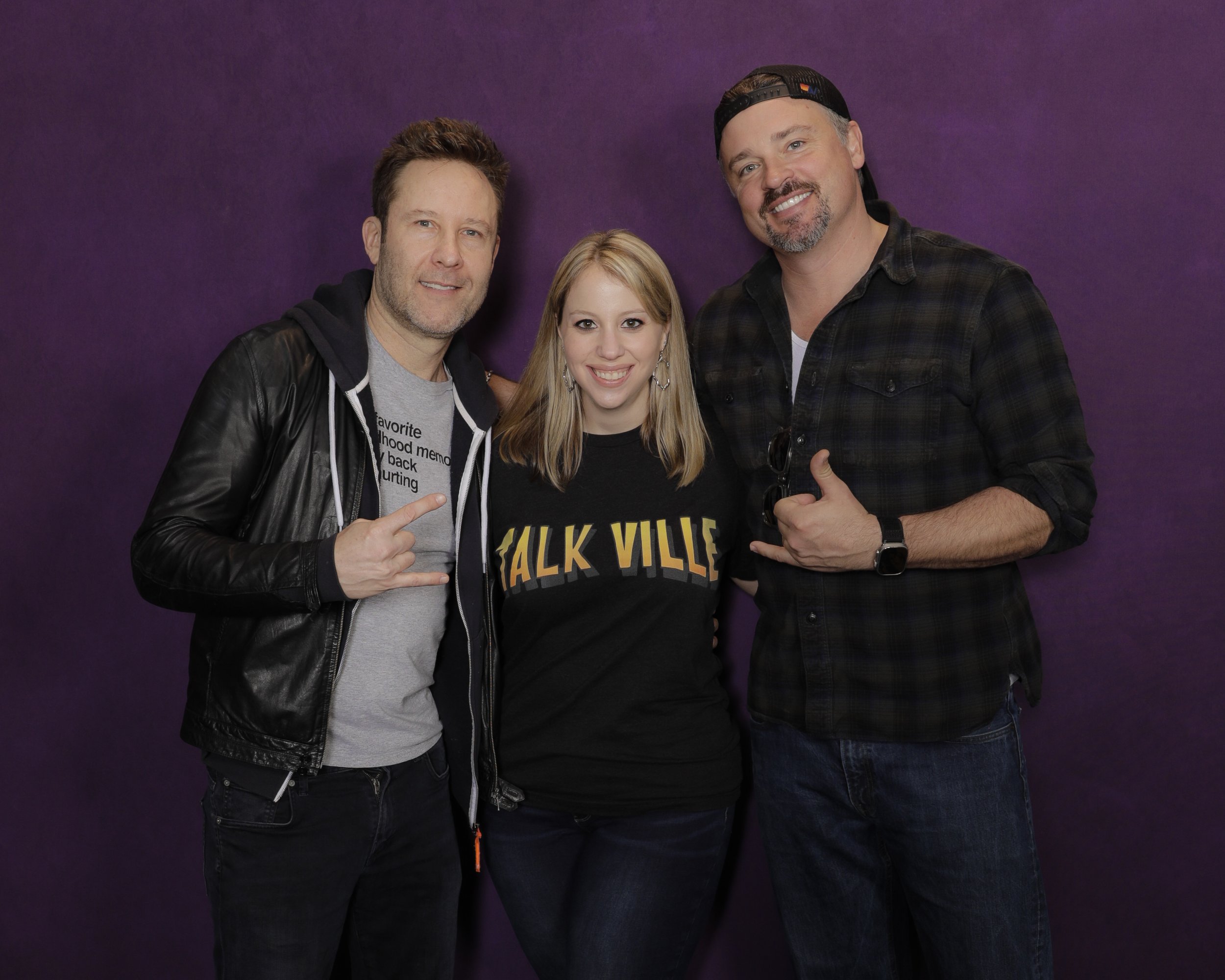
Michael Rosenbaum and Tom Welling from Smallville at a fan convention
Enjoy the art. Enjoy the community. Just remember that the people behind the screen are real humans living complex lives that we only see small glimpses of and we are not entitled to more than that.
And sometimes the healthiest fandom move is simply closing the app and touching grass.
If You’d Like Support
If online conflict, stress, or emotional overwhelm has been weighing on you, therapy can help.
In my counseling practice, I work with adults navigating anxiety, emotional stress, and complicated relationship dynamics in thoughtful and practical ways.
If you’re interested in learning more about working together, you can explore my services or reach out through my contact page.
You deserve a life where the things you enjoy bring connection and energy, not stress.
Related Articles: The Psychology Behind the Heated Rivalry Obsession: A Therapist’s Take
When Your Hero Lets You Down: Coping with Celebrity Disappointment
Dating in Stars Hollow: What Gilmore Girls Teaches Us About Healthy (and Unhealthy) Relationships
Why We Cry Over Fictional Deaths: The Science of Emotional Attachment in Fandom
10 Therapist-Recommended Mental Health Books to Support Your Healing Journey