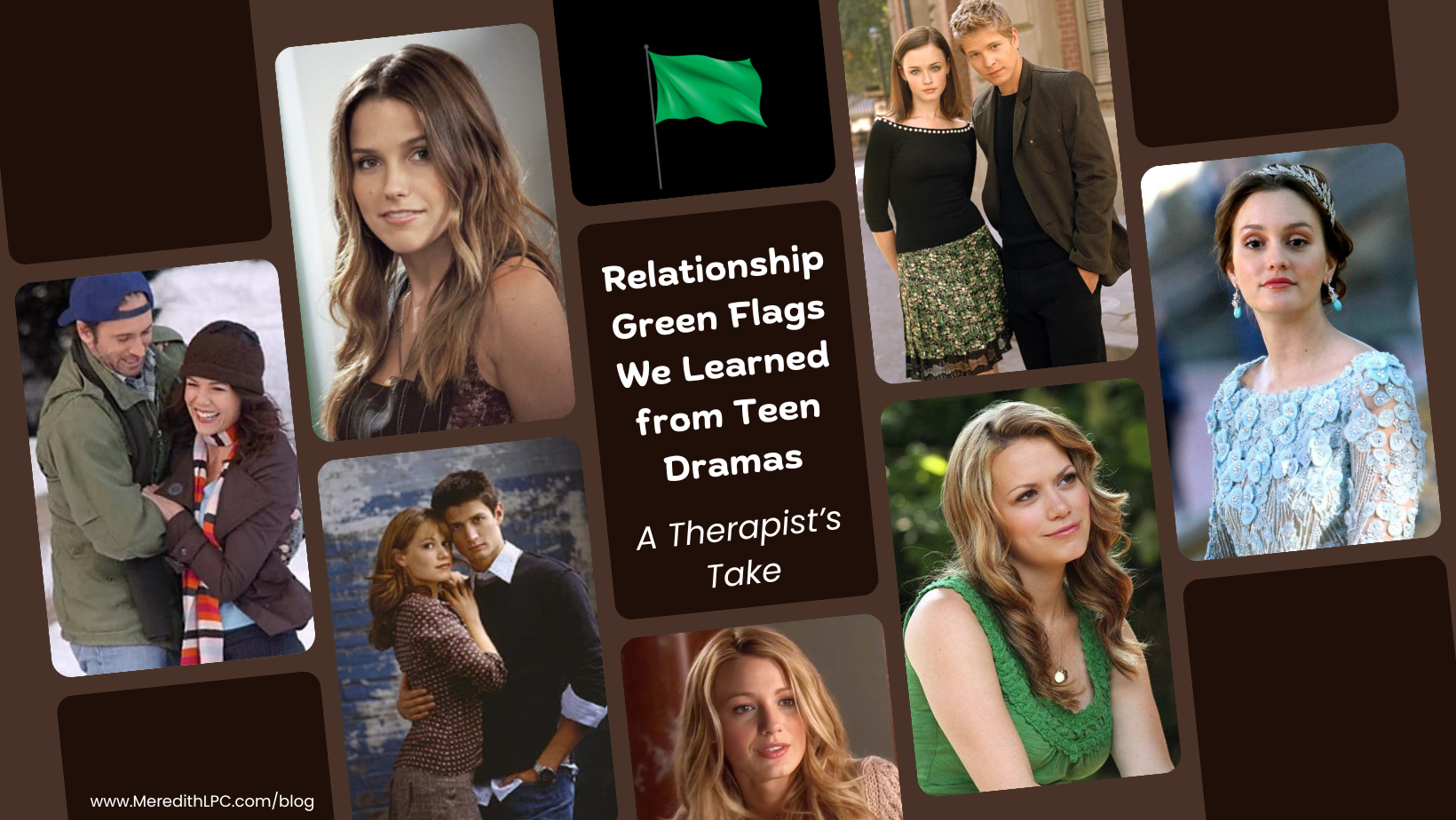
Relationship Green Flags We Learned from Teen Dramas: A Therapist’s Take
Teen dramas aren’t exactly known for healthy relationships; there are only so many love triangles, rooftop arguments, and dramatic walk-outs a person can survive. But every now and then, a character shows us what healthy connection actually looks like. And when they do, it’s a reminder that green flags aren’t boring - they’re the foundation that real, steady love is built on.
If you read my post on relationship red flags through the lens of Gilmore Girls, One Tree Hill, and Gossip Girl, here’s the companion piece: the bright spots. The moments where characters surprised us, stepped up, or broke toxic patterns instead of repeating them.
Because in real life, green flags matter more than clever banter, “bad boy” brooding, or grand gestures involving coffee carts.
1. Consistency You Can Set Your Watch To
Example: Luke (Gilmore Girls)
Underneath the flannel and grumbling, Luke showed up - every single time. From fixing the inn toaster (again) to listening when Lorelai spiraled, he offered emotional reliability before they ever got together.
Green flag: A partner who’s steady, predictable in the best way, and follows through on what they say.
Why it matters: Calm is not “boring.” Consistency builds the safety that lets real intimacy grow.
2. Accountability Without Melodrama
Example: Haley (One Tree Hill)
When Haley messed up - tour drama, communication issues - she didn’t double down or blame-shift. She owned it, apologized, and repaired.
Green flag: Taking responsibility for the hurt caused, not performing a dramatic speech and calling it emotional growth.
Why it matters: Accountability is the backbone of trust. You can’t build a healthy relationship with someone who treats apologies like courtroom closing arguments.
3. Respect for Your Autonomy (Even When It’s Hard)
Example: Serena (Gossip Girl)
Serena made mistakes, sure, but she repeatedly showed a willingness to let the people she loved make their own decisions, even when she disagreed (or when Dan was being particularly self-righteous).
Green flag: A partner who doesn’t need to micro-manage your friendships, your time, or your whole personality.
Why it matters: Healthy relationships allow space. Love doesn’t require shrinking yourself to fit someone else’s comfort zone.
4. Being On Your Team, Not Competing With You
Example: Nathan Supporting Haley’s Dreams (OTH)
Later seasons Nathan is where the real growth happens. He encouraged Haley’s music, her teaching career, and her ambitions, even when it meant sacrifice.
Green flag: A partner who celebrates your success and doesn’t treat your goals as a threat.
Why it matters: Relationships thrive when both people can grow without fear of outgrowing each other.
5. Emotional Effort (Not Just Grand Gestures)
Example: Logan at His Best (Gilmore Girls)
Logan wasn’t perfect - nobody with that many trust funds is - but he grew emotionally. When he supported Rory through burnout, let her take space to figure out her path, or stopped deflecting with charm long enough to actually listen, he showed real green flags.
Green flag: Emotional openness, genuine listening, and effort that’s consistent, not just during life-or-death stunts or elaborate birthday surprises.
Why it matters: Emotional maturity is attractive. Full stop.
6. Loyalty That Isn’t Blind
Example: Blair (Gossip Girl)
Yes, Blair Waldorf had her scheming era, but she also showed fierce loyalty to the people she loved in healthy ways as the series went on. She apologized more, listened more, and set boundaries (except for those brief, chaotic Chuck detours).
Green flag: Loyalty paired with honesty, not secrecy or self-sacrifice.
Why it matters: Healthy loyalty supports both partners rather than consuming one of them.
7. Growth That’s Actually Sustainable
Example: Brooke Davis (One Tree Hill)
Brooke’s glow-up is one of the best arcs in teen TV. She went from insecure and performative to grounded, self-aware, and able to communicate her needs clearly.
Green flag: Someone who does their own internal work - not changing for you, but growing with you.
Why it matters: Healthy relationships require two people evolving, not one person dragging the other into adulthood.
What These Shows Get Right About Green Flags
Even with all the drama, these shows highlight something important:
supportive relationships feel calm, not chaotic
communication matters more than chemistry
people can grow when they’re safe, not afraid
healthy love includes interdependence, not enmeshment
Green flags aren’t flashy, but they’re deeply attractive when you’re ready for a relationship that actually works.
You Deserve Green Flags, Too
Whether you’re trying to break old patterns, understand why you’re drawn to certain dynamics, or build healthier communication skills, therapy can give you the tools you need for seeking more green flags and presenting more green flags.
You can schedule a therapy session by reaching out through my website.
Healthy love is possible, and it often starts with recognizing what it should feel like.
Related Articles:
Dating in Stars Hollow: What Gilmore Girls Teaches Us About Healthy (and Unhealthy) Relationships
Mother-Daughter Dynamics: The Good, The Bad, and the Gilmore
Chosen Family, Identity, and Belonging: What "Harry Potter" Teaches Us About Adoption
Why We Cry Over Fictional Deaths: The Science of Emotional Attachment in Fandom
