AO3 Is Down: Let's Talk About Fanfiction, Escapism, and Mental Health
AO3 is down, potentially for weeks, and the internet is not handling it particularly well.
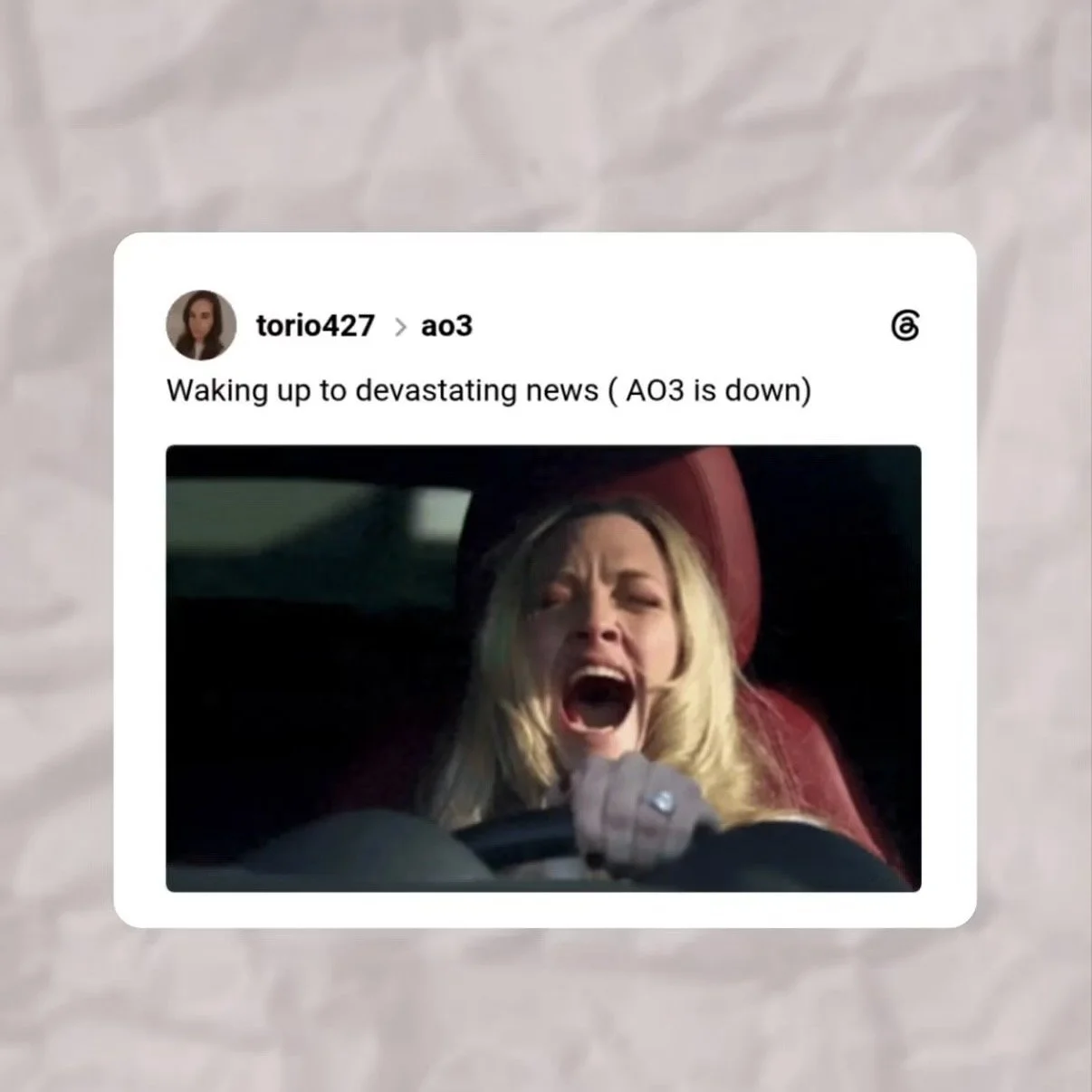
The memes are everywhere. People are mourning their unfinished stories, joking about losing their primary coping mechanism, and wondering what they're supposed to do at bedtime now. Some are even considering picking up an actual book.
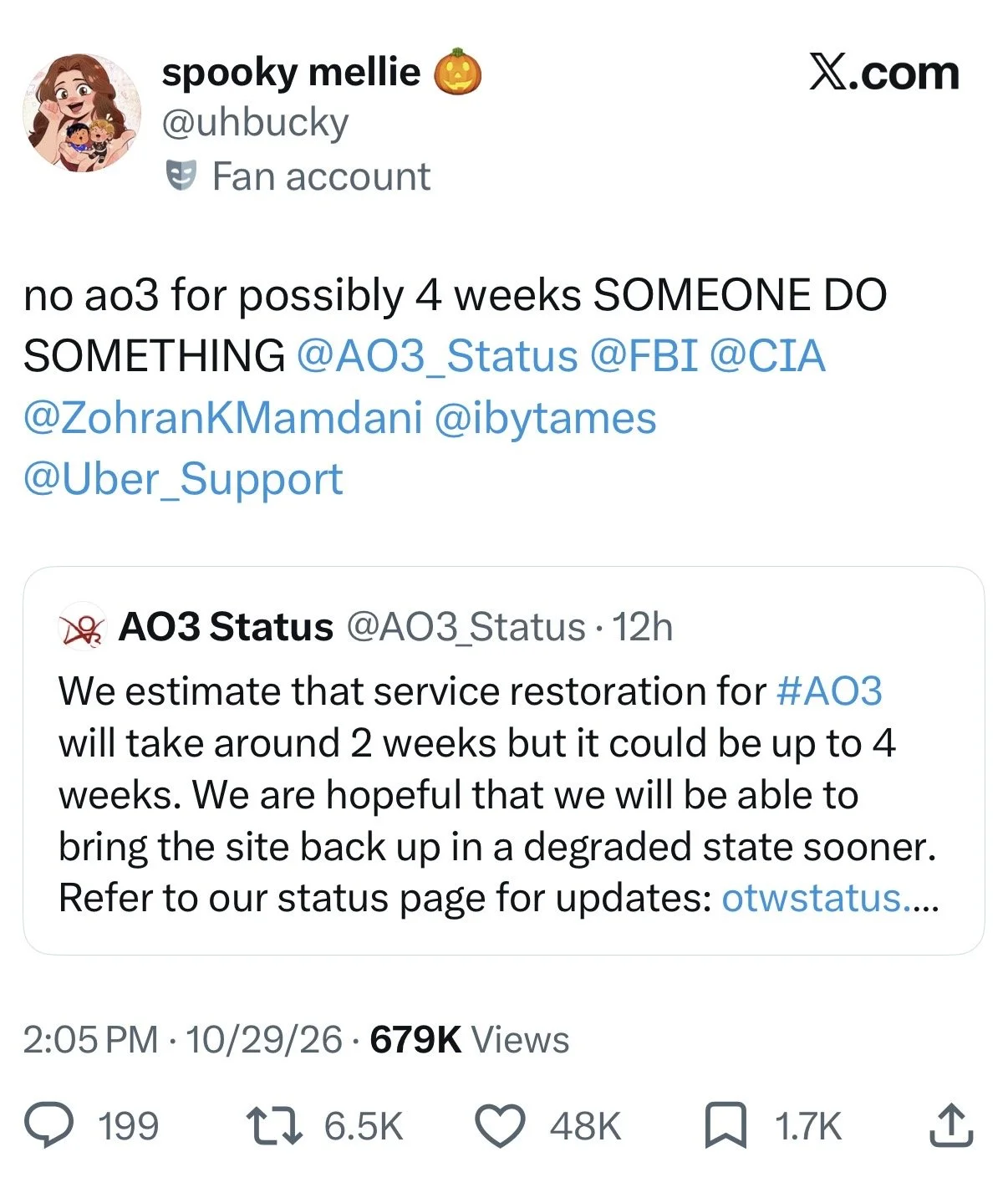
As both a therapist and a fanfiction reader, I've been laughing at the memes while also feeling the pain. But underneath all the jokes is an interesting psychological question: Why do we get so much comfort from fanfiction, and why does losing access to it, even temporarily, feel like such a big deal?
And perhaps more importantly, is escaping into fictional worlds really such a bad thing?
Spoiler alert: Not necessarily.
First, What Exactly Is Fanfiction?
For the uninitiated, fanfiction is fictional stories written by fans using characters, relationships, and/or fictional worlds that already exist. (Think movies, tv shows, books, and video games.) It might explore what happens after a story ends, rewrite an ending, imagine an alternate universe, or give two characters the relationship fans desperately wanted them to have.
Archive of Our Own, better known as AO3, is a free, nonprofit archive where people share and read fan-created works. It's home to millions of stories across thousands of fandoms, from Harry Potter and Supernatural to Star Wars and Heated Rivalry.
Romance is a huge part of fanfiction, alongside stories about friendship, family, adventure, grief, healing, and just about anything else you can imagine. Some explore characters who barely appeared in the original work, while others completely reinvent familiar fictional worlds.
If you've never ventured into fanfiction, you might be surprised by just how creative it gets. Your favorite characters might be professional athletes in one story, former enemies navigating life after a magical war in another, or a bookstore owner falling for the customer who keeps finding excuses to stop by. They might be reluctant coworkers, college roommates, or strangers who somehow end up sharing a bed because, naturally, there's only one.
Yes, even if they were already in love in the original story.
Especially if they were already in love in the original story.
Why Do We Want to Read the Same Characters Falling in Love 1,410 Different Ways?
This is one of my favorite things about fanfiction.
You can read dozens of stories featuring the exact same characters, the exact same relationship, and even the exact same scene, just rewritten from a slightly different perspective.
And somehow, it's still satisfying.
Why?
Because familiarity is comforting.
Our brains tend to appreciate predictability, particularly when the rest of life feels uncertain or overwhelming. When we already know and love the characters, we don't have to spend time getting to know an entirely new fictional world. We can jump straight into the emotional experience.
We know who these people are. We know their personalities, their histories, and their complicated relationships. We already care about what happens to them.
Fanfiction lets us revisit those familiar emotional connections while still experiencing something new.
There's also something satisfying about exploring possibilities. What if that conversation had gone differently? What if one character had been honest about their feelings sooner? What if a beloved character had survived? What if an entirely different decision had changed the course of the story?
Maybe we want to fix something that happened in canon, explore what could have been, or simply pretend that one particularly devastating plot point never happened. That's what canon divergence is for.
Or maybe we just want to watch the same two idiots fall in love again.
The original story isn't always enough. We want more conversations, more tenderness, more emotional vulnerability, more adventures, and maybe a few hundred additional happy endings. (And some unhappy endings, apparently. HEA only for me, please!)
It's not necessarily about needing a different story. We just want more time with characters who make us happy, and more opportunities to explore the worlds and possibilities we've grown attached to.
Fanfiction as Emotional Regulation
Emotional regulation is our ability to manage and respond to our emotions. We all use different strategies to help ourselves feel calmer, happier, or more grounded.
Some people exercise. Some listen to music. Some watch their favorite television show for the twentieth time. And some read a 450,000-word slow-burn romance about two fictional characters who could resolve their problems with one honest conversation.
All of these activities can serve a similar purpose.
Reading fanfiction can provide a mental break from stress, offer comfort after a difficult day, or simply give us something enjoyable to anticipate.
It can also allow us to experience emotions in a relatively safe environment. We can explore heartbreak, vulnerability, conflict, intimacy, friendship, grief, and healing through characters we've grown attached to.
Take hurt/comfort, for example. It's a popular trope that lets us see our favorite characters go through something difficult and come out the other side with someone who cares about them. There's something reassuring about seeing vulnerability met with compassion.
We can also choose what kind of emotional experience we're in the mood for. That's why we check the tags before committing to a 200,000-word fic. Some days we're ready for angst. Other days, it's fluff and a guaranteed happy ending or nothing.
We might cry over fictional people, but we also know we can close the browser whenever we want.
Well, assuming the website is working.
Of course, fanfiction isn't a substitute for professional mental health treatment when it's needed. But not everything that supports our emotional well-being has to be a formal therapeutic intervention.
Sometimes reading something that makes you happy is enough.
Escapism Isn't Always Avoidance
The word escapism sometimes gets a bad reputation. We tend to associate it with avoiding responsibilities, ignoring problems, or refusing to engage with reality.
And yes, escapism can become unhealthy when we're consistently using it to avoid important aspects of our lives. But there's a difference between taking a break from reality and refusing to participate in it.
Healthy escapism gives us an opportunity to recharge. Unhealthy avoidance keeps us from addressing things that need our attention.
Reading fanfiction after a stressful workday? A perfectly reasonable way to unwind. Occasionally staying up later than planned because the story is just that good? We've all been there.
Consistently sacrificing sleep, neglecting relationships, or avoiding important responsibilities because you can't stop reading? That might be worth examining.
As a therapist, I'm much more interested in the function of a behavior than whether it looks productive from the outside. Is this activity adding enjoyment to your life? Helping you relax? Giving you something to look forward to?
Or is it becoming your only way of managing difficult emotions?
This distinction is key. Plus, I think we could all benefit from letting go of the idea that every moment of our free time needs to be productive. You don't have to improve yourself, learn a new skill, or accomplish something meaningful every time you sit down to relax. You're allowed to enjoy things simply because you enjoy them.
Fandom Is About More Than the Stories
Another important piece of this conversation is community. Fandoms bring people together through shared interests, creativity, humor, and emotional investment. People write stories, create artwork, exchange recommendations, analyze characters, debate plot points, and form friendships with others who understand their enthusiasm.
It is genuinely meaningful to find people who get excited about the same things you do.
For some people, fandom communities can also provide opportunities to explore identity, relationships, sexuality, and personal values in ways that feel safe and affirming.
And let's not underestimate the value of simply having fun with other people.
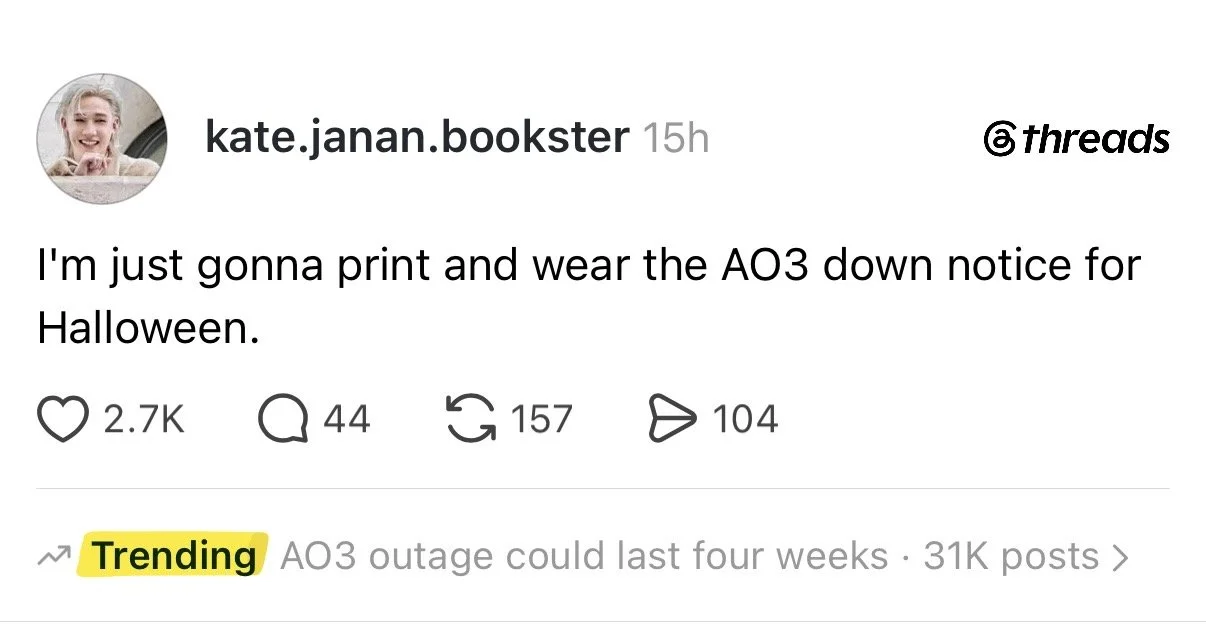
Shared enthusiasm creates connection. Inside jokes create belonging. Even collectively complaining about a website outage can make people feel part of something bigger.
The AO3 memes are a pretty good example of this. People are responding to a frustrating situation with humor, creativity, and a sense of shared experience.
And a special shoutout to the fans organizing Google Drives full of downloaded fics to help the rest of us survive these difficult times.
Fandoms can be a lot like dysfunctional families. We have our disagreements and our drama, but when disaster strikes, apparently we're ready to launch an emergency relief effort.
Say what you will about fandom, but we really do show up for each other. Seriously, kudos to everyone keeping the fandom alive while AO3 is down. If I could leave more than one, I would.
So What Happens When Our Favorite Coping Mechanism Disappears?
When something becomes part of our regular routine, we can grow surprisingly attached to it. Maybe you read fanfiction every night before bed. Maybe you check for updates during your lunch break. Maybe you have a favorite comfort story that you revisit when you're anxious or overwhelmed.
Those routines provide predictability and something to look forward to. When they're suddenly unavailable, it's normal to feel disappointed or frustrated. That doesn't necessarily mean you have an unhealthy attachment. It means you've lost access to something you enjoy.
Of course, if the absence of one activity leaves you feeling genuinely unable to manage your emotions, that might be a sign that your coping toolbox could use a few additional options.
Psychological flexibility involves being able to adapt when circumstances change, even when we don't particularly like those changes.
Maybe that means picking up a book, revisiting a favorite show, connecting with friends, trying another creative hobby, or yes, touching grass (we all need it).
Not because fanfiction is bad for you, but because having multiple sources of comfort makes life a little easier when one of them is temporarily unavailable.
And, of course, there's one coping strategy that might have saved us all some distress: having your favorite fics downloaded ahead of time, just in case. Sometimes preparedness really is the key to emotional well-being.
Let People Enjoy Things
There's a tendency to dismiss certain hobbies, especially ones associated with fandom, romance, or online communities, as silly or immature.
But enjoyment doesn't need to be justified.
Stories have always helped people make sense of their emotions, connect with others, and imagine different possibilities for their lives.
Fanfiction is simply another form of storytelling, one that allows people to participate in the worlds and relationships they love rather than only consuming them.
While it's important to maintain a healthy balance between our fictional interests and our everyday responsibilities, there's nothing inherently wrong with finding comfort in familiar characters, exploring different possibilities, or reading the same love story in a thousand different variations.
I think it's pretty wonderful that people can find so much happiness in something as simple as a shared story.
So, to everyone currently surviving the great AO3 outage of 2026: Your disappointment is understandable, your memes are excellent, and your favorite fictional characters will still be there when the archive returns.
In the meantime, be kind to yourself, find a few alternative sources of joy, and maybe consider downloading your favorites next time.
And when AO3 finally returns, I'm sure we'll all go right back to adding another fifty stories to our Marked for Later lists while ignoring the hundreds already waiting for us.
Keep reading, keep writing, and keep the kudos coming!
If You Need It, Support Is Available
If you're looking for a therapist who understands the importance of fandom, creativity, and the things that bring you joy, I offer online counseling for adults in Georgia and Florida. Reach out today to learn more.
Related Articles: Parasocial Relationships: When Being a Fan Becomes Personal
The Psychology Behind the Heated Rivalry Obsession: A Therapist’s Take
Supernatural: The Power of Fandom for Mental Health
When Your Hero Lets You Down: Coping with Celebrity Disappointment
Fandom & Mental Health Podcast Interview